Thailand, Southeast Asia’s second-largest economy, has been making significant strides in developing its startup ecosystem. Despite this progress, it still lags behind regional leaders like Singapore and Indonesia in terms of startup density and investment. This article delves into the current state of Thailand’s startup ecosystem, identifies key challenges, draws comparisons with neighboring countries, and proposes actionable solutions to enhance its growth and competitiveness.
Current State of Thailand’s Startup Ecosystem
Thailand has witnessed a flourishing startup scene in recent years, particularly in sectors such as e-commerce, fintech, health tech, and agritech. The government’s “Thailand 4.0” policy aims to transition the economy towards innovation and technology-driven industries, providing a supportive backdrop for startups. Additionally, the rise of co-working spaces, incubators, and accelerators has created a conducive environment for entrepreneurial ventures.
However, despite these positive developments, Thailand’s startup ecosystem remains underrepresented compared to its Southeast Asian counterparts. For instance, while Singapore and Indonesia have produced multiple unicorns, Thailand has relatively few startups that have reached such valuations. This disparity highlights the need for a more robust support system to nurture and scale startups within the country.
Key Challenges
1. Limited Early-Stage Funding: Access to seed and early-stage financing remains a significant hurdle for Thai startups. Many venture capital firms and investors exhibit a preference for later-stage investments, leaving early-stage startups struggling to secure the necessary capital to develop and scale their ideas.
2. Fragmented Ecosystem: The lack of cohesive collaboration among universities, corporations, government agencies, and investors leads to missed opportunities for innovation and growth. This fragmentation hampers the development of a unified ecosystem that can effectively support startups throughout their lifecycle.
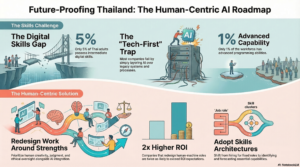
3. Talent Development and Retention: While Thailand boasts a young and tech-savvy population, there is a pressing need for a skilled workforce in high-tech sectors to support startup growth. The government has recognized this gap and aims to develop 280,000 workers in advanced industries over the next five years.
4. Regulatory Hurdles: Complex and sometimes ambiguous regulations can deter both local and foreign entrepreneurs from establishing and scaling startups in Thailand. Streamlining regulatory processes is essential to create a more startup-friendly environment.
Recommendations for Thailand
1. Establish World-Class Accelerator Programs: Develop accelerators tailored to Thailand’s unique strengths and challenges to provide startups with mentorship, funding, and networking opportunities. Such programs can bridge the gap between early-stage startups and potential investors, facilitating growth and scalability.
2. Enhance Collaboration: Foster partnerships among universities, corporations, government agencies, and investors to create a cohesive ecosystem that supports innovation and entrepreneurship. Establishing a public-private innovation council could align stakeholders on a shared vision and strategy.
3. Increase Early-Stage Funding: Encourage the growth of angel investor networks and provide tax incentives to stimulate seed-stage investments. Additionally, setting up co-investment programs with venture capital firms can provide startups with the necessary capital to develop and scale their ventures.
4. Develop Skilled Talent: Implement training programs and educational initiatives to build a workforce capable of supporting high-tech industries and startups. The government’s plan to develop 280,000 workers in advanced industries over the next five years is a step in the right direction.
5. Streamline Regulations: Simplify regulatory processes to make it easier for startups to launch and operate, thereby attracting both local and international entrepreneurs. Clear and supportive regulations can reduce barriers to entry and encourage innovation.
6. Promote Success Stories: Highlight and celebrate successful Thai startups to inspire and motivate budding entrepreneurs. Showcasing success stories can also attract investor interest and build confidence in the Thai startup ecosystem.
7. Leverage Digital Nomad Visa: Capitalize on the digital nomad visa program to attract international talent and foster a diverse entrepreneurial community. Engaging expat founders and digital nomads can bring in fresh perspectives, cross-border networks, and startup experience, enriching the local ecosystem.
Next Steps
Thailand’s startup ecosystem stands at a pivotal juncture, brimming with potential yet facing distinct challenges that require strategic intervention. By implementing targeted recommendations—such as establishing world-class accelerator programs, enhancing ecosystem collaboration, increasing early-stage funding, developing a skilled talent pool, and streamlining regulatory processes—Thailand can position itself as a leading innovation hub in Southeast Asia.
1. Policy Implementation and Monitoring: The Thai government should prioritize the enactment of supportive policies, ensuring they are effectively implemented and regularly assessed for impact. Establishing a dedicated task force to oversee these initiatives can facilitate coordinated efforts and timely adjustments.
2. Stakeholder Engagement: Continuous dialogue among universities, corporations, investors, and government agencies is essential. Regular forums and collaborative platforms can be established to maintain alignment and address emerging challenges collectively.
3. Resource Allocation: Adequate funding and resources must be allocated to support the development of infrastructure, training programs, and regulatory reforms. Public-private partnerships can play a crucial role in mobilizing the necessary capital and expertise.
4. Promotion of Success Stories: Highlighting successful startups can inspire emerging entrepreneurs and attract international attention. Media campaigns and participation in global startup events can showcase Thailand’s vibrant ecosystem.
5. Regular Ecosystem Assessment: Conducting periodic evaluations of the startup ecosystem will help in understanding the evolving needs and measuring the effectiveness of implemented strategies, allowing for data-driven decision-making.
By taking these proactive steps, Thailand can not only overcome existing obstacles but also create a sustainable and dynamic environment that fosters innovation, attracts investment, and drives economic growth in the region.